

Top Energy-Efficient Home Design Ideas for Modern Living
Energy-efficient home design has become an important part of modern remodeling and new construction. For homeowners, the right design choices can help reduce energy consumption, lower utility costs, and improve year-round comfort. From better insulation and windows to efficient lighting and smart technology, small and large upgrades can make a meaningful difference.
Whether you’re renovating a single room or updating an entire home, energy-efficient home design ideas can be adapted to your property, budget, and lifestyle. In this guide, we’ll explore practical strategies that can make your home more efficient, comfortable, and sustainable.
Article Summary
- Energy-efficient home design can improve comfort while helping homeowners reduce unnecessary energy use.
- Air sealing and properly installed insulation are key parts of an efficient building envelope.
- Windows, HVAC systems, lighting, appliances, water heating, and renewable energy should be evaluated as part of the home’s overall performance.
- Energy efficiency upgrades should also consider ventilation, moisture control, and indoor air quality.
- A professional home energy assessment can help homeowners identify problems and prioritize improvements before investing in major upgrades.

Transform Your Space with BUILPIRE – Book Your Consultation Today!
How to Prioritize Energy-Efficient Home Upgrades
Not every energy-efficient upgrade delivers the same value for every home. The right starting point depends on the home’s age, climate, existing construction, heating and cooling systems, and the problems you are trying to solve.
For many existing homes, improving the building envelope is a practical place to start. Air sealing and insulation can reduce unwanted heat transfer, improve comfort, and help heating and cooling systems operate more efficiently. ENERGY STAR recommends identifying the specific problems in a home and prioritizing projects based on the home’s needs rather than applying the same upgrades to every property.
A useful approach is to think in three stages. First, identify where energy is being lost through areas such as the attic, walls, floors, windows, doors, and ductwork. Second, address building-envelope problems before investing heavily in new mechanical equipment. Third, evaluate HVAC, lighting, appliances, water heating, and renewable energy options as part of the overall system.
This order can help homeowners avoid spending money on individual products that do not address the underlying problem. For example, replacing an HVAC system may improve equipment efficiency, but poor insulation or uncontrolled air leakage can still affect indoor comfort and energy performance.
A professional home energy assessment can provide a more reliable starting point by identifying the areas that deserve attention first. Once the home’s biggest sources of energy loss are understood, upgrades can be planned around measurable needs rather than trends or isolated product recommendations.
Passive Solar Design
Passive solar design is one of the most effective Energy-efficient home design ideas. It utilizes the sun’s energy to naturally heat and light your home. This strategy involves positioning windows and selecting materials that absorb and slowly release solar heat. Properly placed overhangs and thermal mass (like concrete floors) can help regulate indoor temperatures year-round.
High-Quality Insulation
Good insulation is critical in any energy-efficient home. It keeps your house warm in winter and cool in summer, reducing the need for heating and cooling systems. Focus on insulating walls, roofs, attics, and floors. Spray foam, rigid foam boards, and cellulose are excellent materials to consider.
Insulation performance depends on more than simply adding more material. Proper installation should minimize gaps, voids, compression, and pathways that allow air to bypass the insulation. A well-installed thermal enclosure can improve comfort and reduce unwanted heat transfer throughout the home.
Official source: ENERGY STAR – Complete Thermal Enclosure System
Energy-Efficient Windows and Doors
Upgrading to double or triple-pane windows and insulated doors can drastically reduce heat loss. Look for ENERGY STAR-rated products designed to reduce thermal transfer. Installing low-emissivity (low-E) coatings also enhances energy performance.
Smart Thermostats and HVAC Systems
Heating and cooling account for a large portion of energy use. Smart thermostats allow homeowners to manage indoor temperatures efficiently. Combine these with high-efficiency HVAC systems to reduce energy consumption and costs.
LED Lighting and Smart Controls
Replacing incandescent bulbs with LED lighting is one of the simplest Energy-efficient home design ideas. LEDs consume less electricity and last much longer. Adding dimmers, motion sensors, and smart switches can further optimize your lighting system.
Solar Panels and Renewable Energy
Installing solar panels can significantly reduce your dependence on the grid. Solar technology has become more affordable, and many governments offer tax incentives or rebates. Other renewable options include wind turbines and geothermal systems.
Water-Saving Fixtures
Energy efficiency also extends to water use. Low-flow toilets, faucets, and showerheads reduce water consumption and the energy needed to heat water. Tankless water heaters are another excellent upgrade.
Sustainable Building Materials
Choose environmentally friendly materials such as bamboo flooring, recycled metal, and reclaimed wood. These materials have lower embodied energy and contribute to better indoor air quality.
Efficient Appliances
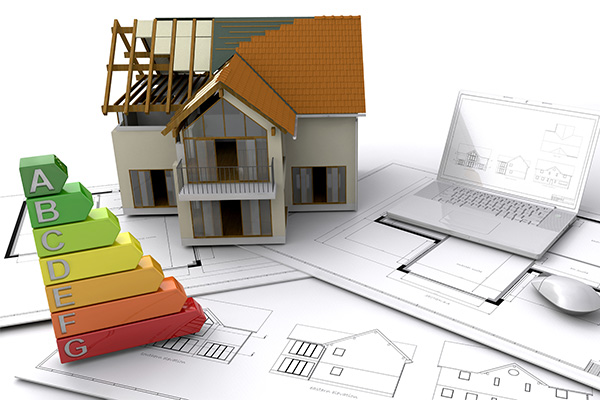
Energy-efficient appliances like refrigerators, washing machines, and dishwashers carry the ENERGY STAR label. These devices use advanced technologies to perform better while consuming less energy.
Proper Ventilation and Air Sealing
Tightly sealing your home prevents drafts and unwanted heat transfer. Combine this with mechanical ventilation systems that bring in fresh air and remove stale air, improving air quality and energy efficiency.
A tighter home is not automatically a healthier home. Air sealing should be coordinated with appropriate ventilation so that moisture and indoor pollutants can be controlled while the home becomes more energy efficient. This is especially important during remodeling and weatherization projects.
Official source: U.S. EPA – Energy, Weatherization and Indoor Air Quality
Energy Efficiency and Indoor Air Quality: Why Both Matter
An energy-efficient home should not simply use less energy. It should also provide a comfortable and healthy indoor environment. This is especially important during remodeling, when insulation, air sealing, windows, HVAC systems, and other building components may be upgraded at the same time.
Air sealing can reduce uncontrolled drafts and energy loss, but a tighter home also needs appropriate ventilation. The U.S. Environmental Protection Agency explains that inadequate ventilation can allow indoor pollutants and moisture to build up, particularly when homes are weatherized or renovated without considering indoor air quality. See EPA’s guidance on energy weatherization and indoor air quality.
For this reason, ventilation should be considered alongside insulation and air sealing rather than treated as a separate issue. Kitchen and bathroom exhaust, mechanical ventilation, moisture control, filtration, and HVAC performance can all influence the indoor environment.
This approach is particularly useful during a home renovation. Instead of focusing only on lower utility bills, homeowners can evaluate energy efficiency, comfort, moisture control, and indoor air quality together. The result is a more balanced upgrade strategy that addresses how the home actually performs as a complete system.
Before making major efficiency improvements, consider whether the existing ventilation and moisture-control systems are adequate for the planned changes. A professional assessment can help identify problems that may otherwise remain hidden after the renovation is completed.
Green Roofs and Cool Roofs
Green roofs are covered with vegetation that provides insulation and reduces stormwater runoff. Cool roofs reflect more sunlight and absorb less heat, keeping your home cooler and reducing the need for air conditioning.
Landscaping for Energy Efficiency
Strategically planting trees and shrubs can provide natural shade and wind protection, reducing heating and cooling needs. Deciduous trees offer shade in the summer and allow sunlight in during the winter.
Zoning Systems
Zoning allows you to heat or cool different areas of your home independently. This is particularly useful in larger homes where not every room is in use all the time, helping to avoid wasted energy.
Smart Home Integration
Integrating your systems into a smart home network allows you to control lighting, heating, cooling, and appliances remotely. Automation can help you reduce energy usage based on real-time needs.
Energy Audits and Professional Guidance
Before making major changes, consider getting a professional energy audit. This assessment identifies where your home is losing energy and suggests specific Energy-efficient home design ideas to address those issues.
Before investing in multiple energy upgrades, assess how the home is currently performing. A professional home energy assessment can help identify air leakage, insulation deficiencies, ductwork problems, inefficient equipment, and other opportunities so improvements can be prioritized based on the home’s actual needs.
Energy-Efficient Remodeling: What to Upgrade First
When energy efficiency is part of a home renovation, the most effective strategy is to consider the entire house rather than selecting upgrades one at a time. A remodeling project can be an opportunity to improve insulation, air sealing, windows, HVAC performance, lighting, appliances, and ventilation as part of one coordinated plan.
Start by identifying the home’s existing problems. Drafty rooms, uneven temperatures, excessive heating or cooling costs, moisture issues, and aging mechanical systems can all indicate areas that deserve further evaluation.
The building envelope should receive particular attention. Air sealing, properly installed insulation, and high-performance windows work together to reduce unwanted heat transfer and improve comfort. ENERGY STAR describes these components as part of a complete thermal enclosure system rather than isolated improvements. Explore ENERGY STAR’s guidance on thermal enclosures.
After the envelope is addressed, evaluate the home’s heating, cooling, ventilation, lighting, appliances, and water-heating systems. This helps ensure that new equipment is selected based on the home’s actual performance and needs.
For homeowners planning a larger renovation, energy efficiency should be included during the design stage rather than added as an afterthought. Coordinating these decisions early can make it easier to integrate insulation, windows, HVAC, lighting, and ventilation without having to redesign finished spaces later.
Conclusion
By incorporating these Energy-efficient home design ideas, you not only reduce your environmental impact but also create a more comfortable and cost-effective living space. From insulation and lighting to appliances and solar power, the options are vast and customizable to your needs.
If you’re considering a home renovation or want expert help in implementing these ideas, Builpire is your trusted partner. Specializing in home restoration and interior design, Builpire offers sustainable solutions tailored to your vision. Let Builpire help you turn your home into a modern, energy-efficient sanctuary.
For more ideas and guidance, follow us on Instagram.
Frequently Asked Questions About Energy-Efficient Home Design
What is the best place to start when making an existing home more energy efficient?
Start by identifying where the home is losing energy rather than immediately replacing individual products. A professional home energy assessment can help identify problems with insulation, air leakage, ductwork, windows, HVAC equipment, and other systems. ENERGY STAR recommends using the assessment to prioritize improvements based on the home’s specific needs, climate, and existing conditions.
Should I improve insulation before replacing my HVAC system?
There is no single order that works for every home, but evaluating the building envelope before major mechanical upgrades can help you make better decisions. Air leakage and inadequate insulation can affect comfort and heating and cooling demand. Addressing these issues may also provide a clearer picture of what HVAC capacity the home actually needs. A professional assessment can help determine the appropriate sequence for your property.
Can air sealing make a home too airtight?
Air sealing is an important part of improving energy efficiency, but it should be coordinated with appropriate ventilation. A tighter home can reduce uncontrolled air leakage, while a properly designed ventilation strategy helps manage indoor pollutants and moisture. The EPA recommends considering ventilation and indoor air quality when homes are weatherized or remodeled.
Which energy-efficient upgrades make sense during a home remodel?
A remodel can be a good opportunity to coordinate improvements that are difficult to complete later, such as insulation, air sealing, windows, HVAC systems, ductwork, lighting, and ventilation. The most appropriate combination depends on the home’s existing condition, climate, budget, and renovation scope. Rather than choosing upgrades individually, consider how the components will work together as a complete system.
Is an energy audit worth doing before a home renovation?
An energy assessment can help homeowners understand where energy is being lost and which improvements deserve priority. This can be especially useful before a larger renovation because decisions about insulation, windows, HVAC, ventilation, and air sealing can be coordinated during the design stage. ENERGY STAR recommends assessing the home’s performance before selecting and prioritizing energy improvements.