

The Power of Modern Kitchen Cabinet Designs
The kitchen has evolved into one of the most important spaces in the modern home, serving as a place for cooking, gathering, entertaining, and everyday living. Modern kitchen cabinet designs play a central role in shaping both the appearance and functionality of this space. From sleek, handleless doors and natural wood finishes to custom storage solutions and integrated lighting, today’s cabinetry combines contemporary style with practical features that support different lifestyles. Whether you’re planning a complete kitchen remodel or updating your existing cabinets, choosing the right design can improve organization, maximize available space, and create a cohesive look that complements your home’s overall aesthetic.
Article Summary
- Modern kitchen cabinet designs combine clean aesthetics with practical storage, durable construction, and layouts tailored to everyday routines.
- Popular options include handleless doors, matte finishes, two-tone cabinetry, natural wood grain, glass-front cabinets, and integrated lighting.
- The right cabinet material depends on moisture exposure, finish quality, construction, maintenance requirements, and budget.
- Thoughtful storage planning can improve access to cookware, pantry items, and small appliances without wasting valuable kitchen space.
- Stock, semi-custom, and custom cabinets offer different levels of flexibility, so compare specifications, installation costs, warranties, and project exclusions before deciding.
- For a cohesive kitchen remodel, coordinate cabinetry with countertops, flooring, lighting, appliances, and the overall design of your home.

Transform Your Space with BUILPIRE – Book Your Consultation Today!
Handleless Cabinets: Minimalism at Its Best
Handleless cabinets epitomize the essence of modern design—clean, smooth surfaces free from visual clutter. These cabinets open using a push-to-open mechanism or recessed grooves. They’re perfect for small kitchens, offering a sleek and streamlined appearance.
High-Gloss Finishes: Reflecting Elegance
High-gloss cabinet surfaces reflect light, making your kitchen appear larger and more open. Available in white, black, or bold colors like navy or emerald green, this finish pairs well with metallic accents and minimalist décor.
Matte Finishes: Understated Sophistication
For those who prefer a more subdued aesthetic, matte cabinets offer a luxurious look without the glare. Fingerprint-resistant and velvety to the touch, matte finishes are gaining popularity in modern kitchens.
Two-Tone Cabinets: Dynamic Contrast
Combining two colors—often dark lower cabinets with lighter uppers—adds depth and personality. This trend allows you to play with color while maintaining a balanced, cohesive design.
Natural Wood Grain: Organic Warmth
Modern doesn’t mean cold. Natural wood cabinets in walnut, oak, or bamboo bring warmth and texture to your kitchen. Combine wood with modern metals or quartz countertops for a contemporary fusion.
Open Shelving Hybrids: Display Meets Storage
Blending traditional cabinets with open shelving creates a functional yet decorative storage system. Use shelves to display dishware, plants, or cookbooks while keeping essential items behind closed doors.
Glass-Front Cabinets: Light and Transparency
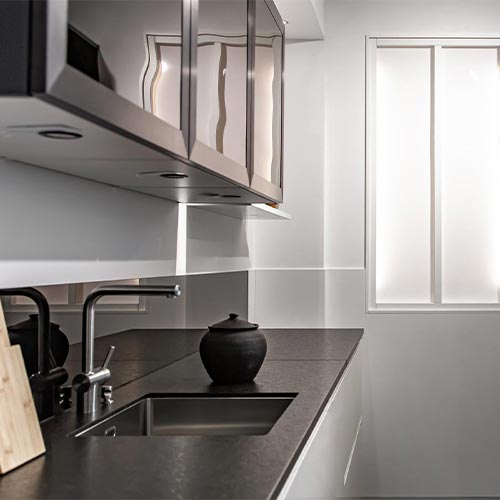
Glass cabinet doors soften the heaviness of solid wood or laminate. Frosted, clear, or tinted glass adds an airy quality and lets you showcase beautiful dishes or glasses.
Smart Storage Solutions: Efficiency First
Pull-out racks, lazy Susans, corner carousels, and built-in organizers maximize every inch of cabinet space. Smart storage features are essential in modern kitchens where every element is intentional.
How to Plan Kitchen Cabinet Storage Around Your Daily Routine
A modern kitchen should be designed around the way you cook, clean, shop, and entertain. Instead of selecting cabinet organizers at random, start by identifying the items you use most often and where you naturally reach for them. This simple planning step can make a kitchen easier to navigate without adding unnecessary cabinetry.
Use drawers for everyday essentials. Deep drawers can make pots, pans, food containers, and mixing bowls easier to access than conventional base cabinets with fixed shelves. Drawer dividers can keep utensils and smaller items organized, while adjustable inserts allow the layout to evolve with your needs.
Make corner cabinets easier to use. Blind corners can waste valuable space when their contents are difficult to reach. Depending on the cabinet dimensions and budget, pull-out systems, rotating organizers, or carefully designed shelving can improve access. Compare the usable storage and hardware capacity before choosing a mechanism.
Create a dedicated pantry zone. Group dry goods, snacks, baking supplies, and frequently used ingredients in one accessible area. Pull-out pantry shelves or adjustable shelving can help you see what you have and reduce the likelihood of forgotten items. In smaller kitchens, a tall cabinet with a well-planned interior may provide useful storage without expanding the footprint.
Plan around appliances and work zones. Store plates and glasses near the dishwasher, cooking tools near the range, and food-preparation items near the main counter. If you regularly use a coffee maker, blender, or stand mixer, consider a dedicated appliance cabinet or countertop station with appropriate clearance and electrical access.
Use vertical space selectively. Floor-to-ceiling cabinets can provide additional storage for less frequently used items, but the upper shelves should remain practical to access. Consider step-free access for everyday essentials and reserve higher storage for seasonal or occasional items.
Before finalizing the cabinet layout, review door swings, drawer clearances, appliance dimensions, and the space needed for multiple people to work comfortably. A successful storage plan makes daily tasks easier first; the finished cabinetry should then reinforce the kitchen’s overall design.
Before finalizing your cabinet layout, create a list of everyday cookware, pantry items, small appliances, and serving pieces. Then assign storage locations based on where each item is used. The NKBA’s 2026 Kitchen Trends Report highlights storage maximization, personalized layouts, and multifunctional kitchens as important design priorities. Use these principles to evaluate drawer configurations, pantry access, and appliance storage before approving the final plan.
Floor-to-Ceiling Cabinets: Maximizing Space
Tall cabinets not only provide ample storage but also draw the eye upward, making your kitchen feel taller and more expansive. This is especially beneficial for open-concept or galley kitchens.
Integrated Lighting: Illuminated Elegance
LED strips under cabinets or inside drawers offer both functionality and ambiance. Integrated lighting is a must-have feature in modern kitchen cabinet designs for enhancing visibility and mood.

Black Cabinets: Bold and Timeless
Matte or satin black cabinets add a touch of drama and luxury. When paired with gold hardware or white countertops, black cabinetry becomes a stunning focal point in the kitchen.
Sustainable Materials: Eco-Conscious Choices
From recycled wood to non-toxic laminates, sustainable cabinet materials are in demand. Going green doesn’t mean sacrificing style—it means making smarter, lasting choices.
Choosing the Right Kitchen Cabinet Materials for Durability and Daily Use
The appearance of kitchen cabinets matters, but the materials behind that appearance determine how well they perform over time. When comparing modern kitchen cabinet designs, homeowners should look beyond color and finish to consider moisture exposure, cleaning requirements, construction quality, and everyday use.
Plywood is commonly used for cabinet boxes because its layered construction can provide good structural stability. However, performance depends on the plywood grade, thickness, joinery, and edge protection. Even plywood can be damaged by persistent leaks or prolonged exposure to moisture.
Medium-density fiberboard (MDF) provides a smooth, consistent surface that works well with painted finishes and certain decorative coatings. It can be a practical choice for contemporary, flat-panel doors, although exposed or poorly sealed edges can be vulnerable to moisture damage.
Solid wood offers natural grain variation and can often be refinished, depending on the finish and construction. Wood may expand or contract as humidity changes, so proper installation and suitable finishing are important. It is also worth distinguishing solid-wood doors from cabinet boxes made with engineered panels.
Laminate and thermofoil finishes can deliver a clean, uniform appearance with relatively straightforward maintenance. Their long-term performance depends on product quality, edge detailing, adhesive integrity, and exposure to heat and moisture. Homeowners should ask how the selected finish will hold up near ovens, dishwashers, and sinks.
Before choosing a cabinet material, request details about the cabinet box, door construction, finish, hardware, warranty, and care instructions. In the United States, it is also reasonable to ask whether applicable composite wood components comply with EPA formaldehyde-emission requirements. The best choice is not necessarily the most expensive material; it is the combination of construction and finish that suits your kitchen, budget, and maintenance expectations.
When comparing engineered-wood cabinets, ask your contractor or supplier about applicable formaldehyde-emission compliance for the composite wood components. The U.S. EPA explains which products are covered and how the standards apply. Reviewing this information alongside construction quality, finish durability, and warranty terms helps you make a more informed cabinet selection. Read the EPA’s consumer guide to formaldehyde standards for composite wood products.
Floating Cabinets: Light and Airy
Mounted slightly above the ground, floating base cabinets give a sense of spaciousness. They are often used in modern kitchens for their visual lightness and contemporary flair.
Custom Built-Ins: Tailored Perfection
For homeowners with specific storage needs, custom cabinetry ensures everything has its place. Built-ins blend seamlessly with appliances and architecture.
What to Know Before Investing in Custom Kitchen Cabinets
Custom kitchen cabinets offer flexibility in dimensions, storage, finishes, and appliance integration, but they are not automatically the best option for every remodeling project. Before choosing between stock, semi-custom, and fully custom cabinetry, consider how much flexibility your kitchen actually requires.
Stock cabinets are manufactured in standard sizes and are generally a practical option when the existing layout can accommodate those dimensions. They may limit the available configurations and finishes, but they can help keep a project within a defined budget.
Semi-custom cabinets offer additional choices in dimensions, door styles, finishes, and interior features, depending on the manufacturer. They can provide a useful middle ground for homeowners who want a more tailored layout without specifying every component from scratch.
Custom cabinets are designed around the project’s particular dimensions and requirements. They can be especially useful for unusual room layouts, distinctive architectural features, specialized storage, or precise integration with appliances. Their cost and lead time depend on the design, materials, fabrication, and installation requirements.
When comparing proposals, look beyond the total price. Ask whether the estimate includes cabinet boxes, doors and drawer fronts, finished end panels, fillers, trim, hardware, delivery, installation, and removal of existing cabinetry. Confirm whether countertop work, plumbing, electrical changes, painting, and repairs are included or quoted separately.
It is also important to establish who is responsible for field measurements, final design approval, appliance specifications, and resolving installation issues. Request a written scope of work, an itemized estimate, a realistic schedule, and clear warranty terms before committing.
For homeowners planning a broader kitchen renovation, cabinet decisions should be coordinated with countertops, flooring, lighting, backsplash materials, and appliance placement. Working with an experienced remodeling team early in the process can help identify layout conflicts before they become expensive changes during construction.
The right cabinet investment is the one that balances the space you have, the way you use your kitchen, the quality you expect, and the budget you can comfortably support.
Do not compare kitchen cabinet proposals by the headline price alone. Ask each contractor to specify cabinet construction, door and drawer materials, hardware, finished panels, installation, delivery, and exclusions in writing. The NKBA’s 2026 kitchen design findings emphasize personalized functionality and storage planning, making it important to compare what each proposal actually delivers—not just the cabinet style shown in a rendering.
Color-Pop Cabinets: Adding Energy
While white and neutral tones dominate modern design, bold-colored cabinets like teal, mustard, or coral are making a comeback. They add personality without overpowering the space.
For more ideas and guidance, follow us on Instagram.
Why Modern Kitchen Cabinet Designs Matter
Investing in modern kitchen cabinet designs doesn’t just enhance visual appeal—it improves functionality, organization, and even property value. Cabinets are the backbone of your kitchen’s layout and play a crucial role in daily life.
Whether you’re a minimalist or a maximalist, there’s a modern kitchen cabinet design that can align with your lifestyle, enhance your workflow, and make your space feel like home.
And if you’re considering a kitchen renovation or interior remodeling project, look no further than Builpire. As a leader in home restoration and interior design, Builpire specializes in transforming kitchens with the latest modern kitchen cabinet designs and high-end materials. With expert craftsmanship and attention to detail, Builpire turns your vision into reality.
Frequently Asked Questions About Modern Kitchen Cabinet Designs
Are handleless kitchen cabinets practical for everyday use?
Yes, handleless kitchen cabinets can be practical for everyday use when the opening mechanism and cabinet layout are selected carefully. Integrated finger pulls provide a streamlined appearance without relying on exposed hardware, while push-to-open systems offer a more minimal look. However, push-to-open doors may require more frequent surface cleaning because users touch the cabinet fronts directly. Before choosing a system, test how easily the doors open and close, consider accessibility for everyone in the household, and confirm that the hardware can be adjusted or replaced if necessary.
Are matte or glossy kitchen cabinets easier to maintain?
Neither finish is universally easier to maintain. Glossy cabinets can be simple to wipe clean, but fingerprints, smudges, and surface scratches may be more noticeable depending on the color and material. Matte finishes reduce reflections and can create a softer appearance, although some surfaces may retain oils or show marks. Performance varies by coating and manufacturer, so ask for cleaning instructions and, if possible, test a sample under your kitchen’s lighting before making a final decision.
What kitchen cabinet colors are likely to remain timeless?
Warm whites, natural wood tones, soft neutrals, and understated greens or blues can provide a versatile foundation for modern kitchen cabinet designs. The best choice depends on natural light, countertop materials, flooring, and the overall style of your home. If you want to experiment with a stronger color, consider using it on a kitchen island or a limited section of cabinetry rather than throughout the entire room. This approach can introduce personality while making future updates easier. Sample cabinet finishes in the actual kitchen before committing, since lighting can significantly change how a color appears.
How long should modern kitchen cabinets last?
There is no single lifespan that applies to every kitchen cabinet. Longevity depends on the quality of the cabinet box and joinery, the finish, installation, humidity, maintenance, and how frequently the cabinets are used. Well-constructed cabinets with suitable hardware can provide many years of service, while water leaks, damaged edges, loose hinges, and poor installation can shorten their useful life. Ask about the manufacturer’s warranty, hardware specifications, cleaning requirements, and repair options. Regularly inspect areas around sinks and dishwashers for leaks or moisture damage.
Should kitchen cabinets be installed before countertops and the backsplash?
In many kitchen renovation projects, base cabinets are installed and leveled before the countertop is measured and fitted. The backsplash is commonly completed after the countertop, although the exact sequence depends on the materials, design, and installation method. Upper cabinets may be installed before or after certain other finishes depending on the project plan. Cabinet dimensions, appliance clearances, electrical connections, plumbing, and countertop specifications should be coordinated before work begins. Your remodeling contractor should confirm the installation sequence for your specific kitchen to minimize rework and avoid conflicts between trades.