


Kitchen Fire Restoration Experts to the Rescue
A kitchen fire can leave behind far more than visible burns and charred surfaces. Even after the flames are extinguished, smoke, soot, heat, and water used during firefighting can continue to affect cabinets, walls, flooring, appliances, contents, and nearby areas of the home. Some of this damage may not be immediately visible, making a professional assessment an important first step before cleaning, repairing, or rebuilding. Professional kitchen fire restoration helps identify the full extent of the damage, protect salvageable materials, and develop a safe, practical plan for restoring the space.
Kitchen Fire Restoration: Key Takeaways
- Kitchen fire damage can extend beyond visible burn marks and may involve smoke residues, soot, odors, moisture, HVAC systems, and hidden building materials.
- Professional fire restoration begins with a detailed assessment to determine the extent of damage and identify which materials can be cleaned, restored, or replaced.
- Smoke and soot can travel beyond the kitchen, making adjacent rooms, contents, and air-handling systems important parts of the restoration assessment.
- The ANSI/IICRC S700 Standard provides a current professional framework for assessing and restoring fire and smoke damage in buildings and contents.
- Fast, properly documented restoration can help homeowners protect salvageable property, support insurance claims, and make informed repair and replacement decisions.
- A successful kitchen fire restoration can also create an opportunity to improve the home’s functionality, ventilation, materials, and overall safety during reconstruction.
Transform Your Space with BUILPIRE – Book Your Consultation Today!
What Are Kitchen Fire Restoration Services?
Kitchen fire restoration services are a specialized branch of disaster recovery aimed at reversing the effects of fire and smoke damage. These services generally include:
- Emergency board-up and structural stabilization
- Detailed fire and smoke damage assessment
- Debris removal and hazardous material cleanup
- Smoke and soot removal using industrial-grade equipment
- Odor elimination using ozone treatments or hydroxyl generators
- Reconstruction of affected areas (floors, cabinetry, walls, appliances)
- Final sanitization and post-restoration inspection
The Importance of Immediate Action
When a kitchen fire is extinguished, the damage doesn’t stop there. Chemical residues from fire extinguishers, acidic soot, and smoke particles continue to degrade surfaces long after the flames are out. That’s why contacting professional kitchen fire restoration services is not just helpful—it’s vital. Fast intervention prevents:
- Permanent damage to metal surfaces and electronics
- Discoloration of walls, ceilings, and counters
- Mold growth from water used to extinguish the fire
- Respiratory issues caused by airborne contaminants
What Happens to Your Kitchen After a Fire? Understanding Hidden Damage
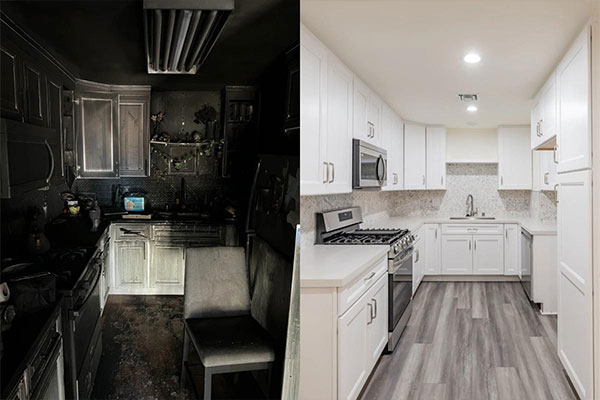
Visible flames and charred surfaces are only part of what a kitchen fire can leave behind. Smoke residues, soot, heat, moisture, and fire-suppression water can affect materials and building systems that may not appear damaged during an initial visual inspection. The extent of the damage depends on factors such as the intensity and duration of the fire, the materials involved, and how far smoke and residues traveled through the home.
Kitchen cabinets, drywall, insulation, flooring, countertops, appliances, and personal belongings may require different restoration or replacement decisions. Smoke and fire residues can also extend beyond the immediate kitchen, particularly when air movement carries particles into adjacent rooms or HVAC components.
This is why professional assessment should go beyond the area where the flames were visible. The ANSI/IICRC S700 Standard for Professional Fire and Smoke Damage Restoration emphasizes evaluating the presence, intensity, and boundaries of fire residues and odors, including their impact on building systems such as HVAC. Learn more about the ANSI/IICRC S700 fire and smoke restoration standard.
A detailed assessment helps determine which materials can be cleaned and restored, which require specialized treatment, and which should be removed and replaced. This approach can prevent homeowners from spending money on unnecessary reconstruction while also reducing the risk of leaving hidden fire-related damage untreated.
Professional fire restoration should begin with a structured assessment of fire residues, odors, affected building materials, HVAC systems, and contents—not simply a visual inspection of the burned area. A documented restoration work plan can help identify what needs cleaning, restoration, removal, or replacement.
Smoke, Soot, and HVAC: Why Fire Damage Can Spread Beyond the Kitchen
A kitchen fire does not necessarily stay contained to the room where it started. Smoke and fine residues can move through open spaces, wall cavities, and air-handling systems, potentially affecting rooms that appear untouched. For homeowners, this means a clean-looking bedroom, hallway, or living area may still require evaluation after a significant kitchen fire.
HVAC systems deserve particular attention because air movement can distribute contaminants throughout a home. The IICRC identifies HVAC and air conveyance systems as an important part of fire and smoke damage assessment and restoration. The appropriate response depends on the condition of the system and the extent of contamination rather than assuming that every HVAC system automatically requires cleaning or replacement.
Indoor air quality is also an important consideration after a fire. The U.S. Environmental Protection Agency explains that indoor air quality can be affected by pollutants originating from building materials, furnishings, combustion sources, and other contaminants. See the EPA’s guidance on indoor air quality.
Professional restoration teams can evaluate affected surfaces, contents, and building systems to develop an appropriate cleaning and restoration plan. Addressing the source of contamination instead of simply covering smoke odors with fragrances or paint is essential for achieving a more complete restoration.
Do not assume that every HVAC system needs to be cleaned simply because a fire occurred. The appropriate response depends on whether smoke, soot, ash, or other contaminants have entered the system or are being distributed through the home. A professional assessment can help determine the right scope of work.
Restore or Replace? How Professionals Decide What Can Be Saved
One of the most important decisions after a kitchen fire is determining what can be restored and what should be replaced. Replacing everything may seem like the safest option, but not every smoke- or fire-affected item is necessarily beyond restoration. On the other hand, attempting to save heavily damaged materials can create additional costs and delays.
Professionals evaluate the type and severity of damage, the material involved, the level of smoke and soot contamination, structural condition, odor persistence, and the feasibility of cleaning or repair. Porous materials can be particularly challenging because smoke-related odors and residues may penetrate beyond the surface.
The current ANSI/IICRC S700 framework recognizes different levels of fire and smoke damage and considers factors such as residue distribution, odor, heat and moisture effects, structural repair requirements, and the restorability of contents when developing an appropriate restoration approach. Review the IICRC S700 standard for professional fire and smoke restoration.
A professional restoration plan should therefore separate salvageable items from materials that require replacement. This can help homeowners make informed decisions, support insurance documentation, and avoid unnecessary demolition while ensuring that seriously damaged materials are not left in place simply to reduce short-term costs.
Restoration and replacement should be treated as separate decisions. A professional assessment should consider the severity and distribution of fire residues, odor, heat and moisture exposure, structural condition, and the restorability of affected contents before recommending replacement.
Step-by-Step Kitchen Fire Restoration Process
- Emergency Contact & Dispatch: Quick response teams are deployed to assess the scene.
- Safety Assessment & Containment: Technicians ensure the area is safe and isolate unaffected spaces.
- Damage Documentation: Photos and reports are created for insurance purposes.
- Debris Removal: Burnt materials, including cabinetry, insulation, and appliances, are disposed of properly.
- Deep Cleaning: Industrial vacuums and dry sponges are used to remove soot. HVAC systems are also cleaned.
- Odor Neutralization: Advanced deodorization methods such as thermal fogging or ozone treatments are used.
- Structural Repairs: Includes carpentry, flooring, drywall replacement, and painting.
- Restoration & Redesign: Optional kitchen redesign for modern functionality and improved fire safety.
Why Choose Professional Kitchen Fire Restoration Services?
Attempting DIY restoration may seem cost-effective but poses risks such as health hazards, incomplete cleaning, and even violation of building codes. Here’s what professionals offer:
- Experience: Technicians are trained in IICRC fire and smoke restoration standards.
- Safety Compliance: Ensures OSHA, EPA, and local safety regulations are followed.
- Efficient Results: Time-saving workflows minimize disruption.
- Insurance Advocacy: Many companies assist in dealing with insurance adjusters.
How to Choose the Right Service Provider
Here are key criteria to evaluate when choosing your kitchen fire restoration services provider:
- 24/7 Emergency Availability: Fires don’t wait, and neither should you.
- Certified Staff: Look for IICRC-certified restoration professionals.
- Transparent Pricing: Ensure the quote includes all phases of work.
- Customer Reviews & Referrals: Seek trusted referrals or verified testimonials.
- Custom Design Capabilities: Especially if you plan to redesign during restoration.
For more ideas and guidance, follow us on Instagram.
Builpire – Your Trusted Restoration & Design Partner
When fire disrupts your life, you need a reliable, skilled team that does more than just patch things up. You need restoration with vision. That’s exactly what Builpire provides. Specializing in both high-end home renovation and kitchen fire restoration services, Builpire goes beyond recovery to deliver transformation. Their experienced teams assess the damage, communicate clearly, and rebuild with top-tier craftsmanship—often integrating modern safety upgrades and aesthetic enhancements.
With Builpire, your post-fire kitchen doesn’t just return to normal—it gets better.
Frequently Asked Questions About Kitchen Fire Restoration
How soon should I start kitchen fire restoration after the fire?
Kitchen fire restoration should begin as soon as the property has been declared safe to enter and the immediate emergency response is complete. Fire damage can be followed by smoke residues, odors, water damage from firefighting, and other secondary effects. Early professional assessment helps document the condition of the property, identify affected areas, protect salvageable contents, and determine the appropriate restoration scope. The U.S. Fire Administration also recommends contacting your insurance company promptly and documenting property damage as part of the recovery process.
Can smoke damage affect rooms that were not directly involved in the fire?
Yes. Smoke and fire residues can move beyond the room where the fire started and may affect adjacent spaces, contents, and building systems. Air movement and HVAC systems can contribute to the distribution of smoke-related contaminants. For this reason, a professional assessment should consider the potential boundaries of smoke and residue impact rather than focusing only on visibly burned surfaces.
Does my HVAC system need to be cleaned after a kitchen fire?
Not necessarily. The need for HVAC cleaning depends on whether smoke, soot, ash, or other fire-related contaminants have entered the system or are being distributed through the home. A professional assessment should determine the condition of the system and the appropriate scope of work. The EPA also recommends that air ducts be cleaned when there is a specific need rather than treating duct cleaning as an automatic requirement after every event.
Can kitchen cabinets and appliances be restored after a fire?
Sometimes. The decision depends on the severity of the fire, heat exposure, smoke and soot contamination, water exposure, material condition, and whether the item can be safely and effectively restored. Some contents and finishes may respond well to specialized cleaning, while heavily charred, structurally compromised, or contaminated materials may require replacement. A professional assessment can help separate salvageable items from those that should be replaced.
What should I document for my kitchen fire insurance claim?
Start by documenting visible damage with photographs and videos, creating an inventory of damaged or missing belongings, and keeping records of restoration-related expenses. Contact your insurance company promptly and ask about the documentation and approval process required under your policy. The U.S. Fire Administration recommends contacting the insurance company early and obtaining written cost estimates when restoration or cleaning services are needed.