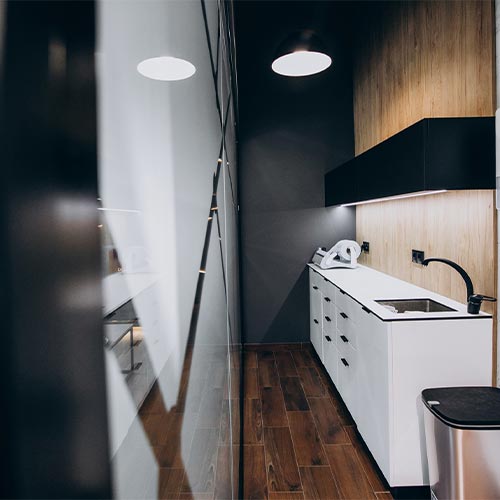



Fireproof Materials for Kitchen Design: The Ultimate Guide to a Safe and Stylish Kitchen
When planning a kitchen remodel, safety should be considered alongside style, functionality, and durability. Choosing the right fire-resistant materials for kitchen design can help improve the kitchen’s ability to withstand heat and reduce the potential for fire to spread. From countertops and backsplashes to flooring, walls, cabinetry, and insulation, each material has a different level of heat and fire performance.
However, creating a safer kitchen is about more than simply choosing products labeled “fireproof.” Material selection should be combined with proper appliance clearances, ventilation, installation practices, and applicable building requirements. Understanding how different materials perform in real kitchen environments can help homeowners make smarter remodeling decisions without compromising the look or functionality of their space.
Key Takeaways: Fire-Resistant Materials for Kitchen Design
- There is no single material that makes an entire kitchen fireproof; safety depends on the complete design.
- Choose materials according to their location, heat exposure, moisture exposure, maintenance needs, and installation requirements.
- Do not treat “fireproof,” “heat-resistant,” and “fire-rated” as interchangeable terms.
- For fire-rated walls and ceilings, evaluate the complete tested assembly rather than an individual material.
- Protect engineered countertops from extreme heat and follow the manufacturer’s care instructions.
- Keep combustible items away from cooktops, ranges, ovens, and other heat sources.
- Plan kitchen ventilation and range hood installation as part of the overall remodeling project.
- Verify applicable local building requirements before finalizing materials and construction details.
- Combine fire-resistant construction with smoke detection, safe cooking practices, proper appliance installation, and regular maintenance.
Transform Your Space with BUILPIRE – Book Your Consultation Today!
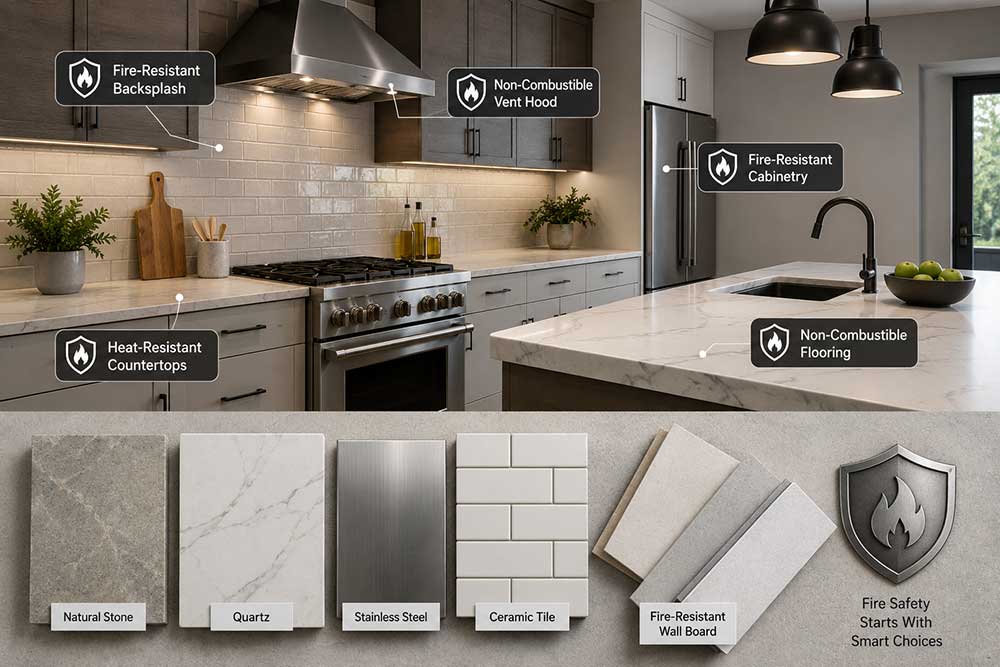
The Best Fireproof Materials for Kitchen Design
1. Fire-Resistant Countertops
- Granite and Quartz: These materials are non-combustible and highly durable.
- Stainless Steel: A popular choice for professional kitchens due to its heat resistance.
- Concrete: Offers both fire resistance and a modern industrial look.
Even a heat-resistant countertop should not be treated as a surface for placing extremely hot cookware. Cosentino recommends using an insulated trivet for hot cookware on Silestone because sudden and extreme temperature changes can damage the surface.
2. Fireproof Flooring Options
- Ceramic and Porcelain Tiles: These tiles are fire-resistant and easy to clean.
- Stone Flooring: Natural stones like granite and slate are fireproof and durable.
- Epoxy-Coated Floors: Provides a seamless and fire-resistant surface.
3. Fireproof Backsplashes and Walls
- Fire-Rated Drywall: Provides an extra layer of fire protection.
- Tempered Glass Panels: Heat-resistant and stylish for modern kitchens.
- Metal Sheets (Copper, Stainless Steel, Aluminum): Prevent fire from spreading.
Do not assume that a fire-rated material automatically creates a fire-rated wall or ceiling. Fire ratings are assigned to tested assemblies, meaning the board, framing, fasteners, joints, layers, and installation method can all affect the final performance.
4. Fire-Resistant Cabinetry
- Metal Cabinets: Offer excellent fire resistance and durability.
- Fireproof MDF and Plywood: Specially treated wood materials with fire-resistant coatings.
5. Fireproof Insulation and Sealants
- Fireproof Caulking and Sealants: Prevents fire from spreading through small gaps.
- Fire-Rated Spray Foam Insulation: Adds an extra layer of fire safety to walls and ceilings.
6. Fireproof Paint and Coatings
- Intumescent Paint: Expands under high temperatures, creating a fire-resistant barrier.
- Fire-Retardant Varnishes: Protect wooden surfaces from catching fire.
- Silicone-Based Heat-Resistant Coatings: Ideal for walls and ceilings.
7. Smart Fire Detection and Suppression Systems
- Smoke and Heat Detectors: Essential for early fire detection.
- Automatic Fire Suppression Systems: Can control fires before they spread.
- Smart Alarms and Sensors: Connect to mobile apps for instant alerts.
Kitchen ventilation should be planned as part of the remodeling design, not added as an afterthought. The 2024 International Residential Code includes requirements for domestic cooking exhaust equipment, including range hoods, exhaust discharge, duct construction, and required kitchen exhaust rates.
Official source: 2024 International Residential Code — Chapter 15
How to Choose Fire-Resistant Materials for Different Areas of Your Kitchen
Choosing fire-resistant materials for a kitchen is not simply about selecting a product that can withstand high temperatures. Different areas of the kitchen face different levels of heat, moisture, grease, and potential ignition. The right approach is to match each material to the conditions of the area where it will be installed.
Around the Cooktop and Range
The area surrounding a cooktop or range requires surfaces that can tolerate heat and remain easy to clean. Ceramic and porcelain tile, natural stone, stainless steel, and other appropriately specified materials can be considered for countertops, backsplashes, and nearby surfaces.
However, heat resistance does not mean unlimited protection from direct or prolonged heat. Even durable surfaces can be damaged by thermal shock or extreme temperatures. Always follow the manufacturer’s installation and care recommendations.
Backsplashes and Walls
A backsplash is one of the most practical areas for incorporating heat-resistant and noncombustible materials. Ceramic and porcelain tile, stainless steel, and certain gypsum-based wall systems can provide durable options around cooking areas.
For applications where a specific fire-resistance rating is required, the performance of the complete wall assembly matters—not simply the finish applied to the wall. For example, USG’s Sheetrock® Brand Firecode® X Panels are 5/8-inch Type X gypsum panels with a noncombustible gypsum core and are listed for applications including kitchens and food preparation areas.
Countertops and Kitchen Islands
Countertops should be evaluated for more than heat resistance. Daily exposure to hot cookware, moisture, stains, impact, and cleaning products can all affect long-term performance.
Natural stone, stainless steel, concrete, and engineered surfaces may all be suitable depending on the design and performance requirements. Engineered surfaces should always be evaluated according to the manufacturer’s specific heat limitations.
For example, Cosentino’s current Silestone care guidance recommends placing hot cookware on an insulated trivet rather than directly on the surface because sudden and extreme temperature changes can damage the material.
Cabinetry Near Cooking Appliances
Cabinet materials deserve particular attention because many conventional cabinets contain wood-based components, adhesives, coatings, or decorative finishes.
Instead of assuming that a cabinet described as “heat-resistant” is fireproof, consider the complete cabinet construction, its location, and the required clearance from cooking appliances. Where a specific fire-resistance requirement applies, the project should be evaluated according to the applicable code and tested assembly requirements.
Kitchen Flooring
Kitchen flooring should balance heat performance with moisture resistance, durability, maintenance, and slip resistance. Porcelain and ceramic tile are practical options for many kitchens because they provide a durable surface that is also resistant to heat and moisture.
Ultimately, the best material depends on its location, proximity to heat sources, installation method, and the performance requirements of the project.
A safer kitchen is therefore not created by choosing one “fireproof” material. It is created by combining appropriate materials with proper installation, appliance clearances, ventilation, and fire-prevention practices.
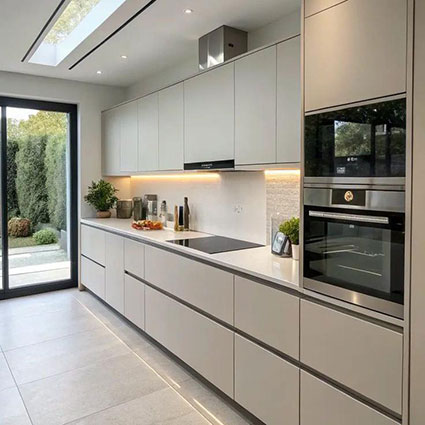
Fire-Resistant Kitchen Design: Materials Are Only One Part of Fire Safety
Fire-resistant materials can improve the resilience of a kitchen, but materials alone cannot prevent a kitchen fire. A safer kitchen requires a combination of appropriate materials, appliance installation, ventilation, clearances, detection, and everyday fire-prevention practices.
Keep Combustible Items Away From Cooking Appliances
Paper towels, packaging, kitchen towels, curtains, wooden utensils, and other combustible items should not be stored immediately next to a cooktop or range.
Creating a practical safety zone around cooking equipment can reduce the opportunity for an ignition source to come into contact with combustible materials. Material selection should support this strategy rather than replace it.
Pay Attention to Kitchen Ventilation
Ventilation is another important part of kitchen design. Properly designed cooking exhaust can help remove heat, moisture, grease, and cooking contaminants from the kitchen.
The 2024 International Residential Code includes specific requirements for domestic cooking exhaust equipment, including range hoods, exhaust discharge, duct construction, and kitchen exhaust rates.
When planning a remodel, the range hood should therefore be considered as part of the overall kitchen system rather than treated as a purely decorative feature.
Maintain Appropriate Clearances
Even a heat-resistant backsplash or countertop should not be treated as permission to install combustible materials immediately next to a heat source.
Clearances should follow the appliance manufacturer’s installation instructions and applicable local building requirements. This is particularly important around ranges, cooktops, ovens, and other appliances that generate substantial heat.
Consider the Complete Assembly
Fire performance can depend on how multiple components work together rather than on the properties of one individual product.
For example, USG notes that fire ratings are assigned to systems rather than to a gypsum board by itself. This means that the framing, fasteners, joints, layers, and installation method can all affect the performance of a fire-rated assembly.
This distinction is important when planning a kitchen remodel because simply choosing a product labeled “fire-resistant” does not automatically create a fire-rated wall or ceiling.
Combine Passive and Active Fire Protection
A safer kitchen combines passive and active protection.
Passive protection can include appropriate wall assemblies, suitable materials, proper clearances, and fire-resistant finishes. Active protection can include smoke alarms, heat detection, fire extinguishers, and other appropriate safety systems.
The goal is not to make the kitchen “fireproof.” The goal is to reduce the likelihood of ignition, slow potential fire development, and improve overall safety through thoughtful design.
Why Choose Fireproof Materials for Kitchen Design?
- Enhanced Safety: Reduces fire risks and provides peace of mind.
- Durability: Fire-resistant materials last longer and require less maintenance.
- Aesthetic Appeal: Modern fireproof materials come in stylish designs.
- Property Value: Homes with fireproof kitchens are more valuable in the real estate market.
- Eco-Friendly Options: Many fireproof materials are also environmentally friendly.
What to Look for When Selecting Fire-Resistant Kitchen Materials
When comparing fire-resistant kitchen materials, homeowners should look beyond marketing terms such as “fireproof,” “heat-resistant,” and “fire-rated.” These terms can describe different levels of performance and should not automatically be treated as interchangeable.
Look for Documented Performance
When fire performance is important to a project, look for documented testing, classification, or certification from a recognized organization.
For example, USG’s Sheetrock® Brand Firecode® X Panels are 5/8-inch Type X gypsum panels with a noncombustible gypsum core and a Type X fire-resistance classification. However, USG also explains that a fire rating is assigned to the complete system rather than to an individual board by itself.
Review Manufacturer Installation Requirements
A material may perform differently when it is installed incorrectly or outside the conditions specified by the manufacturer.
Before purchasing a product, review its approved applications, installation instructions, required clearances, thickness, substrate requirements, and maintenance recommendations.
Consider Heat Exposure, Not Just Fire Resistance
A countertop may tolerate normal kitchen heat but still be vulnerable to thermal shock or prolonged exposure to extremely hot cookware.
For example, Cosentino advises users of Silestone to place hot cookware on an insulated trivet and not directly on the surface.
Consider Maintenance and Grease Exposure
Fire safety is also affected by how easily kitchen surfaces can be cleaned and maintained. Grease accumulation around cooking equipment can create an additional hazard.
Choose materials that can be cleaned according to the manufacturer’s recommendations and design the kitchen so that areas around the cooktop and range hood remain accessible for regular maintenance.
Verify Local Code Requirements
Building requirements can vary by jurisdiction. A product that is appropriate for one application may not automatically satisfy the requirements of another.
Before finalizing a kitchen remodeling project, verify applicable local requirements and determine whether a specific fire-resistance rating applies to the complete assembly.
A professional remodeling contractor can help coordinate material selection, appliance placement, ventilation, clearances, and installation so that safety requirements are considered alongside the overall design.
Conclusion
Incorporating fireproof materials in kitchen design is a crucial step toward creating a safe and stylish space. If you are looking for expert guidance on remodeling your kitchen with fireproof materials, Builpire is the ideal partner. As a trusted name in home renovation and interior design, Builpire specializes in using fireproof materials to enhance kitchen safety and aesthetics. Contact Builpire today to transform your kitchen into a secure and elegant cooking space.
For more ideas and guidance, follow us on Instagram.
Frequently Asked Questions About Fire-Resistant Kitchen Materials
What is the most fire-resistant material for a kitchen?
There is no single material that makes an entire kitchen fireproof. The best material depends on where it will be installed and the type of heat or exposure it may experience. Ceramic and porcelain tile, natural stone, stainless steel, and appropriately specified gypsum products can be useful options for different areas of a kitchen. When a specific fire-resistance rating is required, the complete tested assembly should be evaluated rather than relying on the properties of one individual material.
Are quartz countertops fireproof?
Quartz countertops should not automatically be described as fireproof. Engineered quartz can offer good durability and heat resistance, but extreme or prolonged heat may still damage the surface. Manufacturer recommendations should always be followed. For example, Cosentino recommends using an insulated trivet for hot cookware on Silestone and advises against placing hot items directly on the surface because sudden temperature changes can cause damage.
What is the best backsplash material for a fire-safe kitchen?
Ceramic and porcelain tile and stainless steel are practical options for many kitchen backsplashes, particularly around cooking areas. The best choice depends on heat exposure, moisture, grease, cleaning requirements, installation conditions, and applicable building requirements. If a wall assembly requires a specific fire-resistance rating, the complete assembly should be evaluated rather than relying only on the backsplash finish.
Can fire-resistant materials prevent kitchen fires?
No. Fire-resistant materials can improve the resilience of a kitchen, but they cannot guarantee that a fire will not start. Kitchen fire safety also depends on safe cooking practices, appliance installation, appropriate clearances, ventilation, smoke detection, and regular maintenance. Fire-resistant construction should therefore be considered one part of a broader kitchen safety strategy.
What should I consider when choosing fire-resistant materials for a kitchen remodel?
Start by identifying areas exposed to the greatest heat and potential ignition sources, including the cooktop, range, oven, backsplash, surrounding walls, and nearby cabinetry. Then compare each material based on documented fire or heat performance, installation requirements, durability, maintenance, moisture resistance, and compatibility with the rest of the kitchen assembly. Manufacturer specifications and local building requirements should be reviewed before making a final decision.