

Kitchen design
Introduction to Kitchen Design
Designing a kitchen is about much more than aesthetics—it’s about functionality, comfort, and making the most of one of the most used rooms in your home. Whether you’re renovating or building a new kitchen from scratch, a well-thought-out design can significantly improve your cooking and dining experience.
In this guide, we’ll take you through all the critical aspects of kitchen design, from choosing a layout and picking out appliances to optimizing storage and lighting. Ready to create the kitchen of your dreams? Let’s dive in!
“The details are not the details. They make the design.”
Why Kitchen Design is Important
The kitchen is often referred to as the “heart of the home” for good reason. It’s where families gather, meals are prepared, and memories are made. A good kitchen design doesn’t just enhance the look of your home; it improves the way you live. By carefully planning your kitchen’s layout, style, and functionality, you can transform this space into a more practical and enjoyable environment.

Planning Your Kitchen Layout
The Work Triangle Concept
One of the fundamental principles in kitchen design is the “work triangle.” This concept ensures that the three main work areas—sink, stove, and refrigerator—are easily accessible. The idea is to minimize unnecessary movement, making your kitchen tasks more efficient.
Open Floor Plan vs. Closed Kitchens
Deciding between an open or closed kitchen is a crucial step in your design process. Open floor plans are great for creating a social environment, as they allow seamless interaction with guests or family. However, a closed kitchen offers more privacy and can help contain cooking messes and smells.
Choosing the Right Kitchen Style
Modern Kitchen Design
If you love sleek lines, minimalism, and cutting-edge technology, a modern kitchen design might be perfect for you. It typically incorporates clean surfaces, flat-panel cabinets, and innovative appliances.
Traditional Kitchen Design
For a more timeless feel, traditional kitchen designs often feature ornate details, wooden cabinets, and classic hardware. This style creates a warm, welcoming atmosphere.
Rustic Kitchen Design
A rustic kitchen is all about natural materials, exposed beams, and vintage finishes. This style brings a cozy, country feel to your home, making it perfect for those who love a more casual and earthy look.

Optimizing Kitchen Storage Solutions
Cabinets and Drawers
Maximizing storage in your kitchen starts with smart cabinet and drawer choices. Opt for deep drawers to store pots and pans, and install pull-out shelves for easy access to your pantry items.
Open Shelving Ideas
Open shelving is a trendy option that not only adds visual interest but also gives you easy access to frequently used items. Consider mixing open shelves with traditional cabinets for a balanced look.
Pantry Design
A well-organized pantry can be a game-changer for your kitchen. Consider incorporating built-in shelving, pull-out baskets, and clear containers to keep everything in order.
Selecting the Perfect Countertops
Granite vs. Quartz Countertops
Granite and quartz are two of the most popular countertop materials. Granite offers a natural, unique look with variations in color and pattern, while quartz is more uniform and requires less maintenance.
Budget-Friendly Countertop Materials
If you’re on a budget, there are plenty of affordable countertop options, like laminate or butcher block, that can still offer a stylish look without breaking the bank.
Lighting in Kitchen Design
Task Lighting
Good task lighting is essential for food preparation areas. Under-cabinet lighting or pendant lights over the kitchen island can make a huge difference in visibility and safety.
Ambient Lighting
Ambient lighting sets the mood in your kitchen. Recessed lighting or a statement chandelier can elevate the overall design and make the room feel more inviting.
Appliance Selection for Your Kitchen
Energy-Efficient Appliances
Choosing energy-efficient appliances not only helps the environment but also lowers your utility bills. Look for appliances with an Energy Star rating to ensure optimal performance.
Matching Appliances to Design Aesthetics
When selecting appliances, consider how they fit into your overall design. Stainless steel appliances work well in modern kitchens, while black or white appliances may complement a more traditional space.

Color Schemes and Material Choices
Popular Kitchen Color Trends
Neutral tones like white, gray, and beige remain popular in kitchen design, but bold colors like navy blue or emerald green are also making waves.
Mixing Materials for a Unique Look
Mixing different materials, such as wood, metal, and stone, can add depth and interest to your kitchen. For example, pairing a marble countertop with wooden cabinets creates a chic contrast.
Smart Kitchens: The Future of Kitchen Design
As technology advances, so do kitchen designs. Smart appliances that can be controlled via your phone, touchless faucets, and automated lighting are becoming increasingly popular in modern kitchens. These innovations not only make your life easier but also add a high-tech touch to your space.
Ergonomics and Accessibility in Kitchen Design
When designing your kitchen, it’s essential to think about how you’ll use the space. Ergonomic considerations, like placing frequently used items at eye level and ensuring that appliances are easy to reach, can make a big difference in comfort and efficiency.
Budgeting for Your Kitchen Remodel
A kitchen remodel can be a significant investment, so it’s essential to plan your budget carefully. Prioritize your must-haves, like new appliances or countertops, and look for cost-saving opportunities in other areas, such as DIY tasks or choosing budget-friendly materials.
What are the latest trends in kitchen decoration design that I should consider for my content plan?
For 2024, several exciting kitchen design trends are emerging, blending functionality with aesthetics. If you’re planning content, here are some of the top trends to consider:
- Natural Materials & Earthy Tones
- Warm, earthy colors like terracotta, sage green, and muted browns are making a comeback. Wood, stone, and other organic materials are being used for countertops, cabinetry, and backsplashes.
- Sustainable materials like bamboo and reclaimed wood are particularly in demand, offering an eco-friendly design element.
- Bold, Colorful Cabinets
- While neutral kitchens have dominated in recent years, 2024 is seeing a shift towards bold, colorful cabinets. Deep blues, greens, and even black add a dramatic flair to kitchen spaces, creating a more personalized feel.
- Mixed Metal Finishes
- Designers are embracing mixed metal finishes for faucets, lighting, and cabinet hardware. Instead of matching all metals, homeowners are combining brass, copper, matte black, and stainless steel for a more eclectic look.
- Open Shelving & Glass-Front Cabinets
- Open shelving continues to be popular, allowing homeowners to showcase their beautiful dishes or cookbooks. Glass-front cabinets offer a similar concept but keep things more organized and dust-free.

- Concealed Storage & Minimalist Design
- Kitchens are embracing a clean, minimalist aesthetic with hidden or integrated appliances and concealed storage solutions. This trend creates a clutter-free, streamlined look that maximizes both style and space efficiency.
- Statement Backsplashes
- Unique backsplashes are now a focal point. Think of hand-painted tiles, large slabs of marble, or textured surfaces. These bold designs create an eye-catching feature and add texture or personality to the kitchen.
- Smart Kitchens
- The integration of smart technology is continuing to rise. Touchless faucets, voice-activated appliances, and smart lighting systems are becoming more commonplace, offering convenience and innovation for modern homes.
- Kitchen Islands as Focal Points
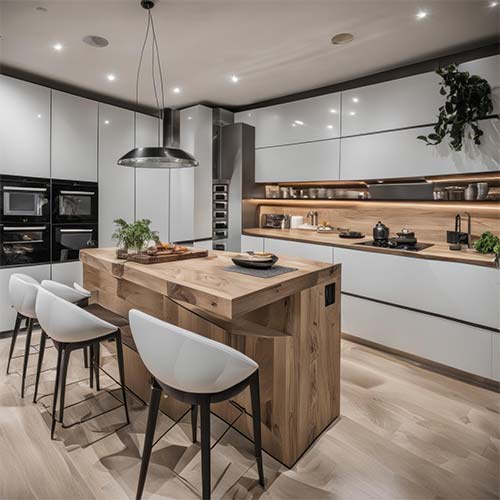
- Oversized kitchen islands are being designed not only as functional spaces but as the heart of the kitchen. With unique countertops (waterfall edges are trendy), seating, and built-in appliances, islands are becoming multi-purpose hubs.
- Textures & Patterns
- 2024 kitchens are also playing with texture. From textured cabinetry finishes to patterned tiles and countertops, there’s a trend toward layering materials and patterns for depth and visual interest.
- Sustainable & Recycled Materials
- With increasing awareness of sustainability, more homeowners are choosing recycled materials like recycled glass countertops or sustainable cabinetry. Eco-friendly paints and finishes are also part of this trend.
- Integrated Indoor Gardens
- More homeowners are incorporating indoor herb gardens or vertical planters directly into kitchen designs, reflecting the growing interest in sustainability and fresh, homegrown ingredients.
- Personalized, Curated Spaces
- There’s a shift from cookie-cutter kitchens to more personalized designs. Homeowners are curating their spaces with art, open shelving, and eclectic decor that reflects their individual style.

Multi-Functional Spaces & Kitchen Zones
Modern kitchens are no longer just for cooking—they’re evolving into multi-functional hubs where families work, socialize, and unwind. Designing your kitchen with designated zones can improve workflow and make the space more adaptable to different needs.
Popular Kitchen Zones Include:
-
Cooking Zone: Includes your cooktop, oven, and nearby countertop space for food prep.
-
Cleaning Zone: Focuses on the sink and dishwasher, with easy access to trash and recycling bins.
-
Social Zone: A dedicated area like a breakfast bar or an oversized island with seating for entertaining guests or casual meals.
-
Work Zone: With remote work becoming more common, many homeowners are integrating small desks or workspaces into the kitchen.
Tip: Use smart design elements like sliding panels or movable islands to adapt the space based on how it’s being used.
How to Choose the Best Kitchen Layout Based on Your Lifestyle
A beautiful kitchen is only successful if it supports the way you live. Before selecting cabinet finishes or countertop materials, consider how your household uses the kitchen on a daily basis. The ideal layout depends on cooking habits, family size, entertaining needs, and available space.
For compact apartments, a galley kitchen offers maximum efficiency by keeping everything within easy reach. This layout minimizes unnecessary movement and is ideal for one or two users.
A U-shaped kitchen provides generous countertop space and storage, making it suitable for families who cook frequently. It also separates preparation, cooking, and cleaning zones naturally.
An L-shaped kitchen is one of the most versatile options. It works well in both small and large homes, leaving enough open space for a dining table or kitchen island.
If you enjoy entertaining guests, an open-plan kitchen with a central island creates a welcoming environment where cooking and socializing happen simultaneously. Modern islands can also include additional storage, seating, sinks, or even wine coolers.
Rather than following trends, homeowners should prioritize workflow, accessibility, and long-term functionality. A kitchen that fits daily routines will remain practical and enjoyable for many years.
Common Kitchen Design Mistakes and How to Avoid Them
Even expensive kitchen renovations can become frustrating if fundamental design principles are ignored. Avoiding common mistakes during the planning stage can save both money and inconvenience.
One of the biggest errors is insufficient countertop space. Preparation areas should be located near the sink and cooktop to improve efficiency during meal preparation.
Poor lighting is another frequent issue. Relying solely on ceiling lights creates shadows over work surfaces. A layered lighting approach—including ambient, task, and accent lighting—provides better visibility while enhancing the kitchen’s atmosphere.
Storage planning is often underestimated. Deep cabinets without pull-out organizers make accessing cookware difficult. Incorporating drawer organizers, corner storage systems, and tall pantry cabinets significantly improves functionality.
Another mistake is choosing aesthetics over durability. Materials such as countertops, flooring, and cabinet finishes should withstand moisture, heat, stains, and daily wear while remaining easy to maintain.
Finally, homeowners frequently overlook future needs. Designing with flexibility allows the kitchen to remain practical as family size, lifestyle, or accessibility requirements evolve.
Kitchen Design Trends That Will Stay Relevant for Years
While design trends change regularly, some concepts continue to prove their value because they combine aesthetics with functionality.
Natural materials remain highly desirable. Wood cabinetry, natural stone countertops, and textured finishes create warm, inviting interiors that age gracefully.
Sustainability has become a major priority. Energy-efficient appliances, LED lighting, recycled materials, and responsibly sourced wood help reduce environmental impact while lowering operating costs.
Integrated storage solutions continue to gain popularity. Hidden pantries, appliance garages, concealed recycling stations, and custom drawer organizers contribute to cleaner, clutter-free spaces.
Smart home technology is also becoming a permanent feature rather than a luxury. Voice-controlled lighting, smart ovens, connected refrigerators, and touchless faucets improve convenience while supporting energy efficiency.
Instead of following short-lived design fashions, homeowners increasingly invest in timeless colors, durable materials, and flexible layouts that maintain both style and resale value over time.
“Form follows function.”
Conclusion
Designing the perfect kitchen requires a balance of style, functionality, and practicality. By planning carefully, optimizing your layout, and incorporating smart storage solutions, you can create a kitchen that’s not only beautiful but also a joy to use. Whether you prefer a sleek, modern look or a cozy, rustic vibe, your dream kitchen is within reach!
FAQs
1. What is the best kitchen layout for small spaces?
The best kitchen layout for a small space depends on the available floor plan, but galley and L-shaped kitchens are generally the most efficient. These layouts maximize usable workspace while maintaining a smooth workflow between the sink, refrigerator, and cooktop. Adding tall cabinets, open shelving, and multifunctional furniture can further improve storage without making the room feel cramped. Choosing light-colored finishes and reflective surfaces also helps create the illusion of a larger kitchen.
2. Which countertop material is the easiest to maintain?
Quartz countertops are among the easiest materials to maintain because they are non-porous, stain-resistant, and do not require periodic sealing like natural stone. They also resist scratches and everyday wear, making them an excellent choice for busy households. While granite remains popular for its natural beauty, quartz generally requires less maintenance over its lifespan.
3. How much storage should a modern kitchen include?
A well-designed modern kitchen should provide enough storage to keep countertops free from clutter while ensuring everyday items remain easily accessible. This often includes deep drawers for cookware, pull-out pantry systems, corner cabinet organizers, vertical dividers for baking trays, and dedicated storage for recycling bins and small appliances. The goal is to maximize functionality without sacrificing aesthetics.
4. Are smart kitchen appliances worth the investment?
Smart kitchen appliances can improve convenience, energy efficiency, and safety. Features such as remote monitoring, programmable cooking cycles, voice control, and energy usage tracking help simplify everyday tasks. Although they usually require a higher initial investment, many homeowners find that the long-term benefits justify the additional cost, especially in connected smart homes.
5. How can I design a timeless kitchen that won’t go out of style?
A timeless kitchen focuses on quality materials, neutral color palettes, functional layouts, and durable finishes rather than short-term design trends. White, beige, gray, and natural wood tones remain consistently popular because they adapt easily to changing decorative styles. Investing in high-quality cabinetry and classic hardware also helps ensure your kitchen maintains its appeal for many years.